Agentic AI for scientific instruments & lab automation

The execution layer between AI and the lab.

Make your instruments easier to use and integrate. We build agent-ready interfaces, custom AI agents and executable digital twins around your domain expertise and existing software.

For instrument manufacturers and laboratory automation teams.

Clients we’ve worked with

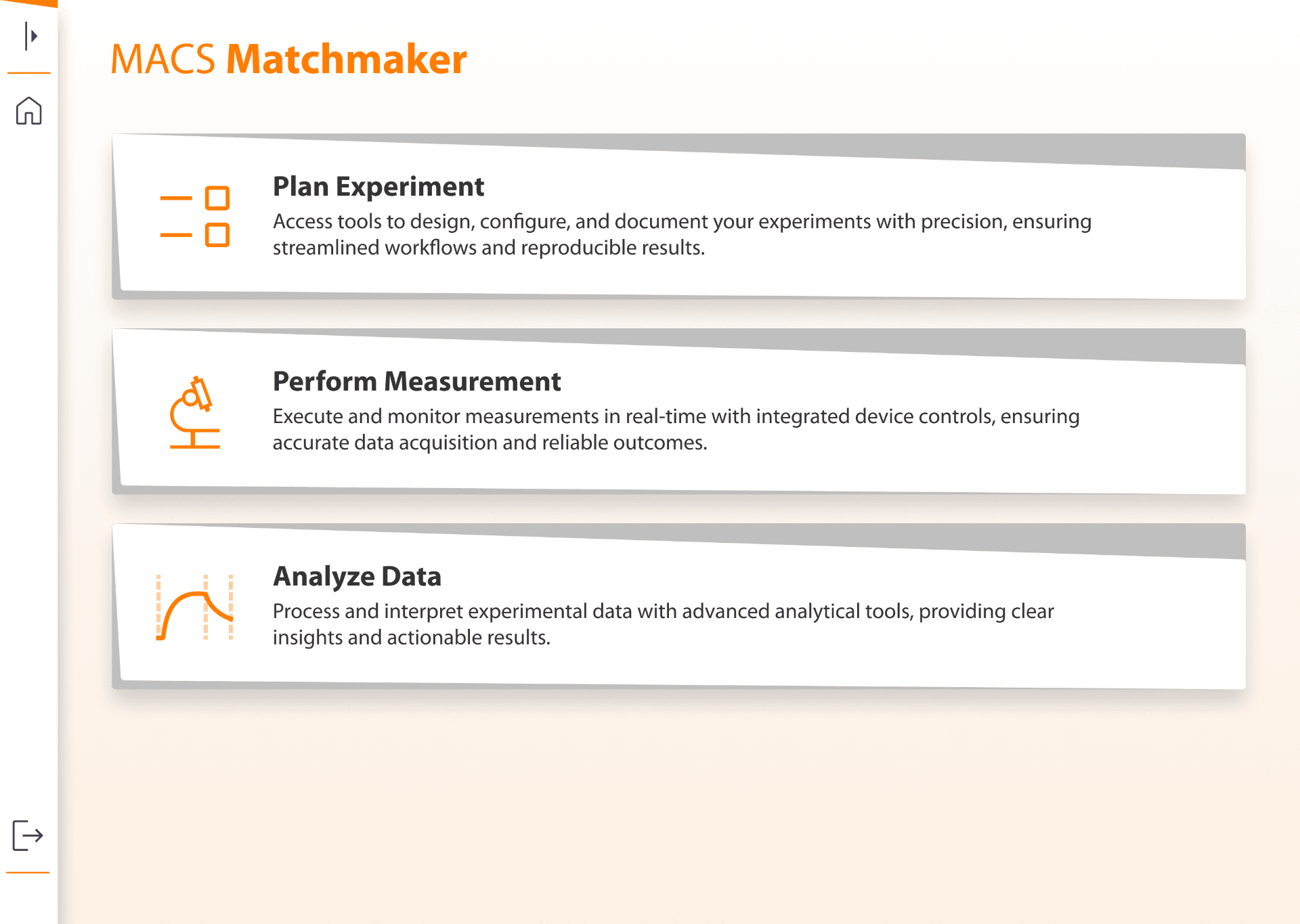
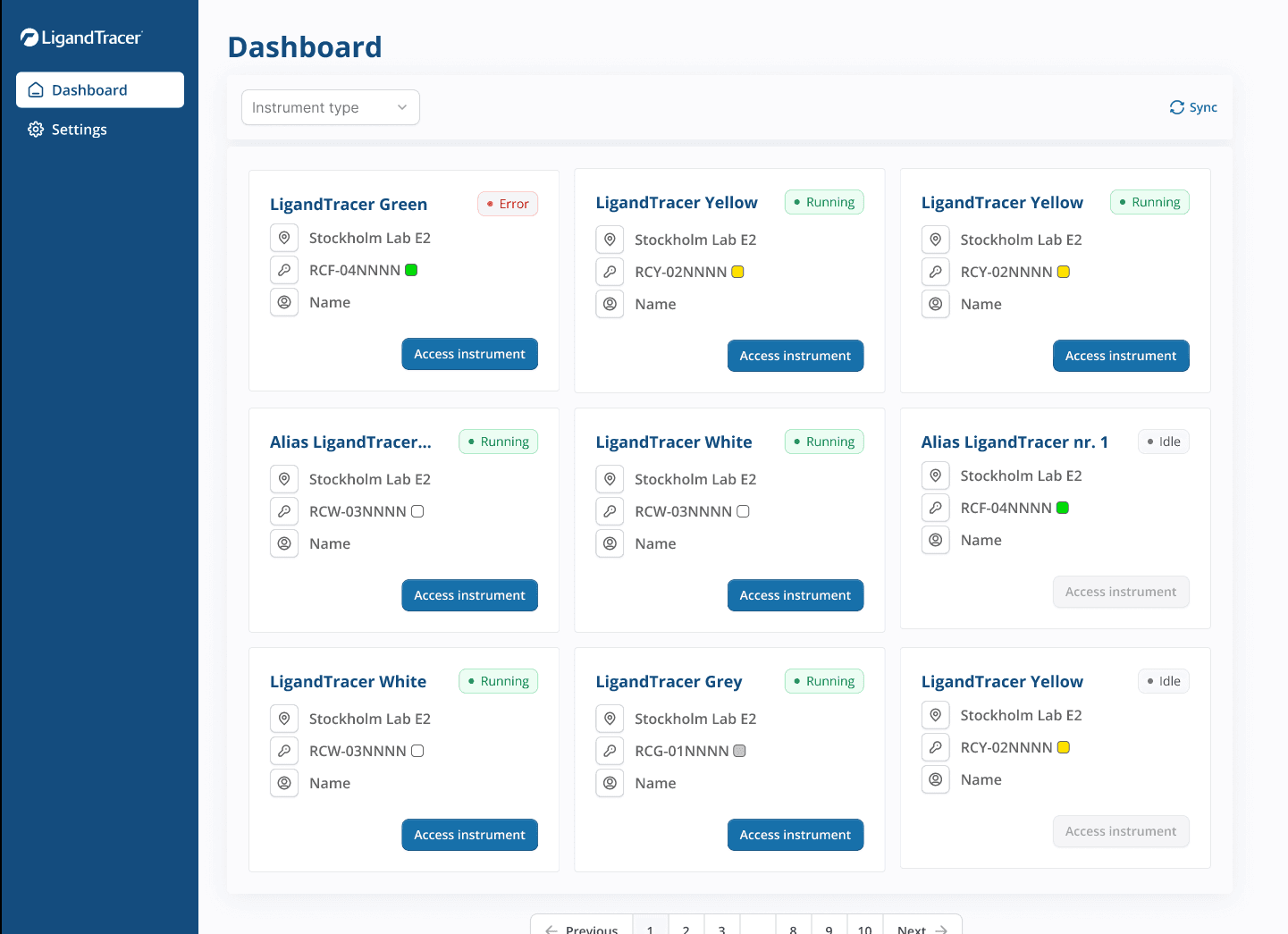
Lino BiotechRidgeview Instruments LigandTracer
From interface to execution

Instrument capabilities → usable interfaces

Connect selected instrument operations to your lab software or AI agent through a defined, tested interface.

Scientific-instrument softwareThe foundation connecting every layer.
Conceptual instrument and model. Select a layer to explore.

Connect · Ground · Verify

What should your instrument do next?

Start with the capability your product or workflow needs. We can deliver one layer or bring them together in a focused project.

01

01 / Connect

Instrument connectivity.
Agent-ready interfaces.

Bring your instruments into the workflow. We connect selected capabilities to your lab platforms and AI agents through defined, tested interfaces.

A focused first delivery

One instrument interface, adapter or integration.

Explore instrument connectivity
02

02 / Ground

Custom AI agents.
Specialized skills.

Make instrument expertise easier to use. Bring your procedures, domain context and scientific tools into an assistant built around the tasks your users need.

A focused first delivery

An assistant evaluated with your domain experts.

Explore custom AI agents
03

03 / Verify

Executable twins.
Reviewable workflows.

Check a plan before it reaches the instrument. Model operations, resources and state to identify steps that violate the constraints your model implements.

A focused first delivery

An executable model and defined test scenarios.

Explore executable twins

Scientific-instrument software.

From interface to integration

Control applications, user interfaces, backend services and remote monitoring. The software that makes a capability part of a usable product.

Technology selected for your architecture.

MCP REST/OpenAPI SiLA 2 Vendor SDKs LangGraph PyLabRobot

Selected work

Built around real instruments.

Completed software delivery for instrument teams. Explore the work and hear directly from the people we worked with.

What impressed me the most about them is their passion to deliver good products.
Dr. Andreas FrutigerVP of R&D, Lino Biotech AG
Their rapid understanding of our needs, agile way of working, and communication stood out.
Jos BuijsCEO, Ridgeview Instruments AB

Explore the engineering

From interfaces to agent workflows.

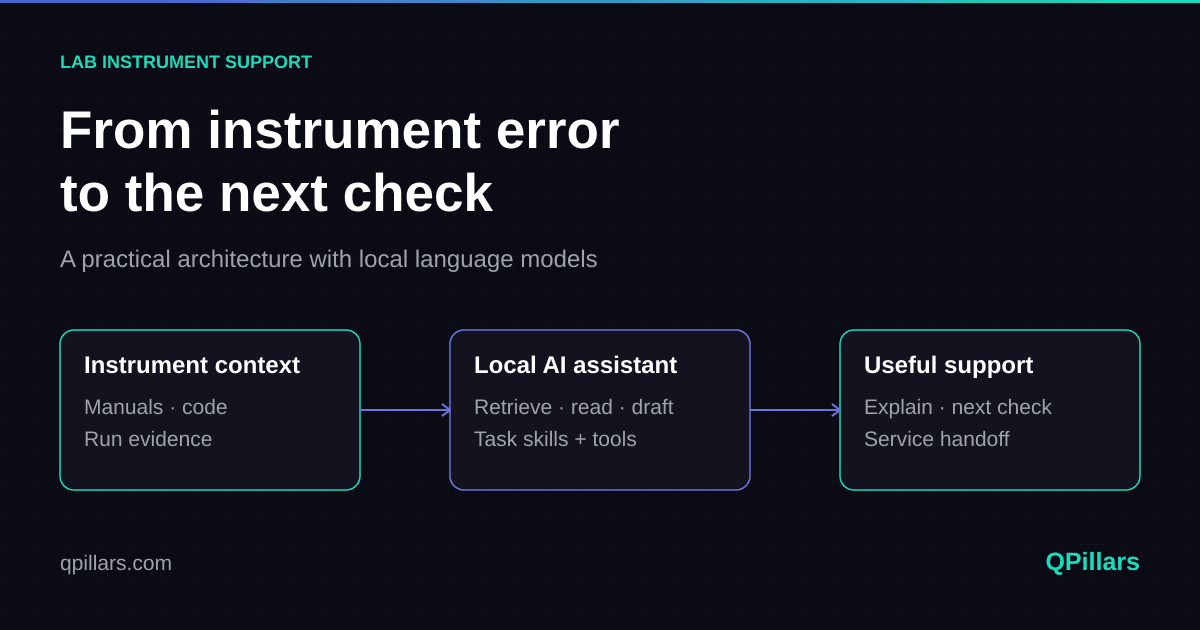
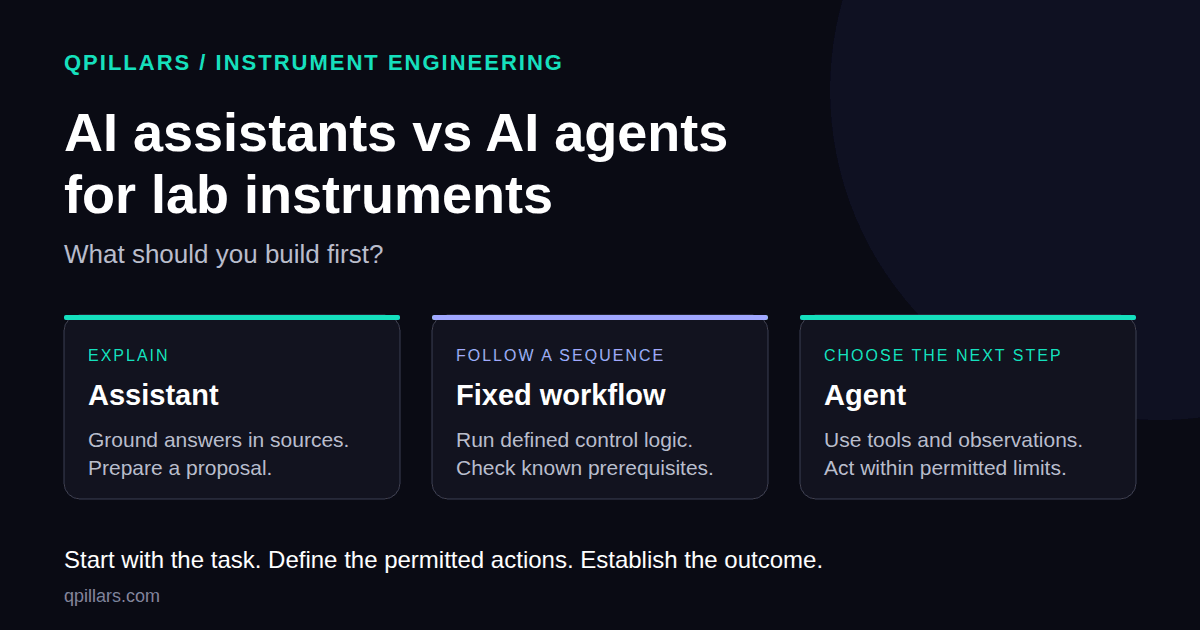
Our tools and demonstrations make the approach inspectable.

How the layers work together

Connect the capabilities.
Ground the agent.
Check the plan.

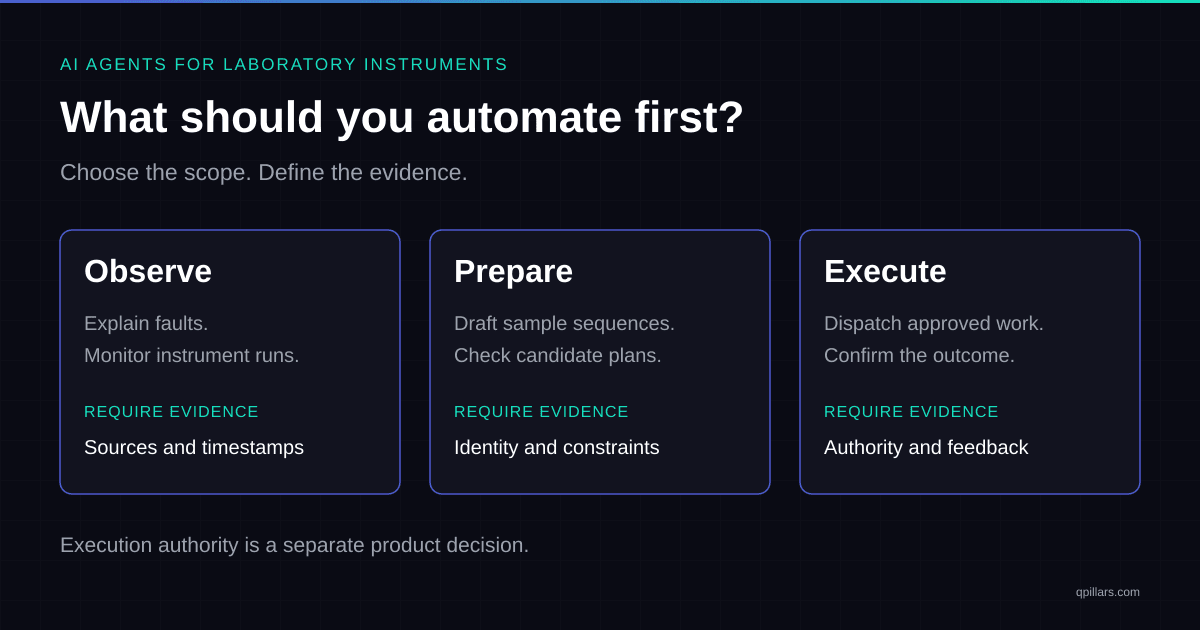
An interface defines what an instrument can do. Specialized skills help an agent use it. An executable twin can check the proposed workflow before approval and dispatch.

Explore the agentic AI approach
  1. 01Goal

    Define the task and useful outcome.

  2. 02Plan

    Use relevant skills and supported operations.

  3. 03Verify

    Check modeled resources, state and constraints.

  4. 04Approve

    Apply the required review and authorization.

  5. 05Execute

    Dispatch through the agreed integration.

For action workflows. Checks cover the model’s implemented constraints. Physical execution needs an agreed integration. Knowledge assistants can be scoped without a twin.

Insights

Notes from the engineering.

Before we start

A few practical questions.

What does QPillars build?

We build instrument interfaces, custom AI agents with specialized skills, executable digital twins and scientific-instrument software. A project can deliver one capability or combine them around a defined instrument or laboratory workflow.

Can you work with our existing instrument software?

Yes. We start with the interfaces, data and software you already have. The first scope identifies the integration boundary and the changes needed for your target workflow.

Do we need SiLA 2 or an AI platform first?

No. We choose the interface around your instrument and the software that needs to use it. REST APIs, vendor SDKs and SiLA 2 are possible inputs. MCP is useful when an AI client needs a tool interface.

What does an executable twin actually check?

It checks proposed operations against the resources, state and constraints represented in its model. A successful simulation does not guarantee physical success. Hardware integration and validation are scoped separately.

How does a first project start?

We discuss one instrument or workflow problem, identify its owner and agree on a useful first outcome. If the scope is clear, we define the first delivery. Where technical investigation is needed, we agree that work first.

Where is QPillars based?

QPillars is headquartered in Zürich, Switzerland, with engineering in Chișinău, Moldova. We work with instrument manufacturers and laboratory automation teams.


Your next project

What’s next for your instrument?

Tell us what you want to connect, simplify or automate. Let’s define the first useful step together.