
Insights
Engineering insights from building scientific instrument software and agentic lab workflows.
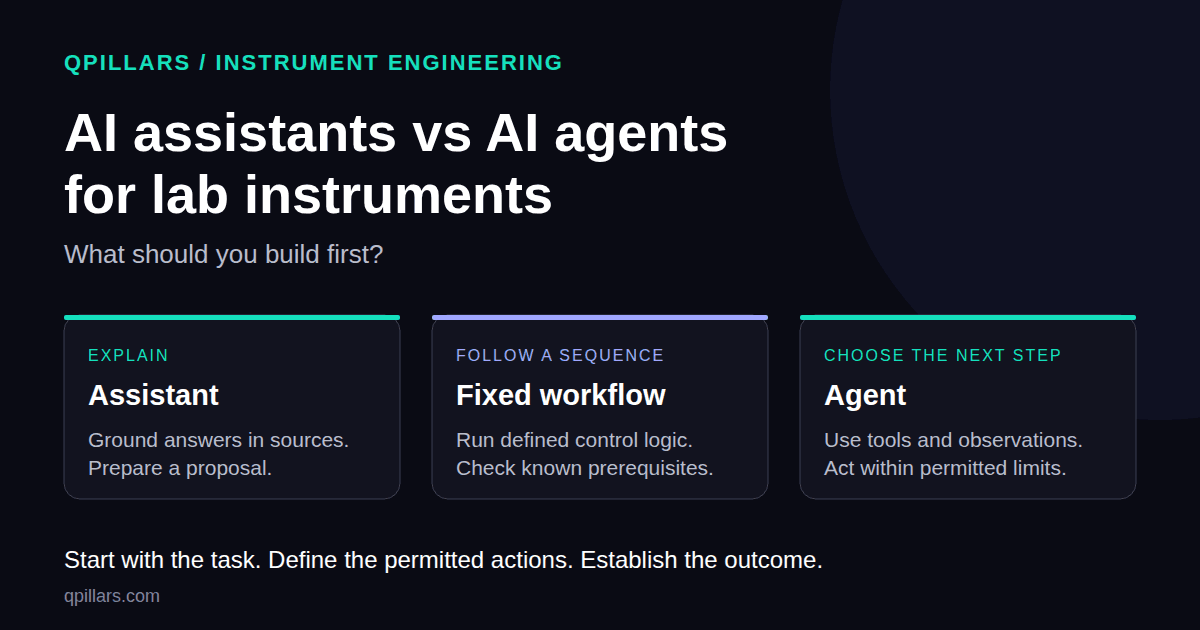
AI Assistants vs AI Agents for Lab Instruments: What Should You Build First?
Choose between an instrument assistant, a fixed workflow and an AI agent. Compare knowledge, tool access, approval and feedback through one laboratory task.
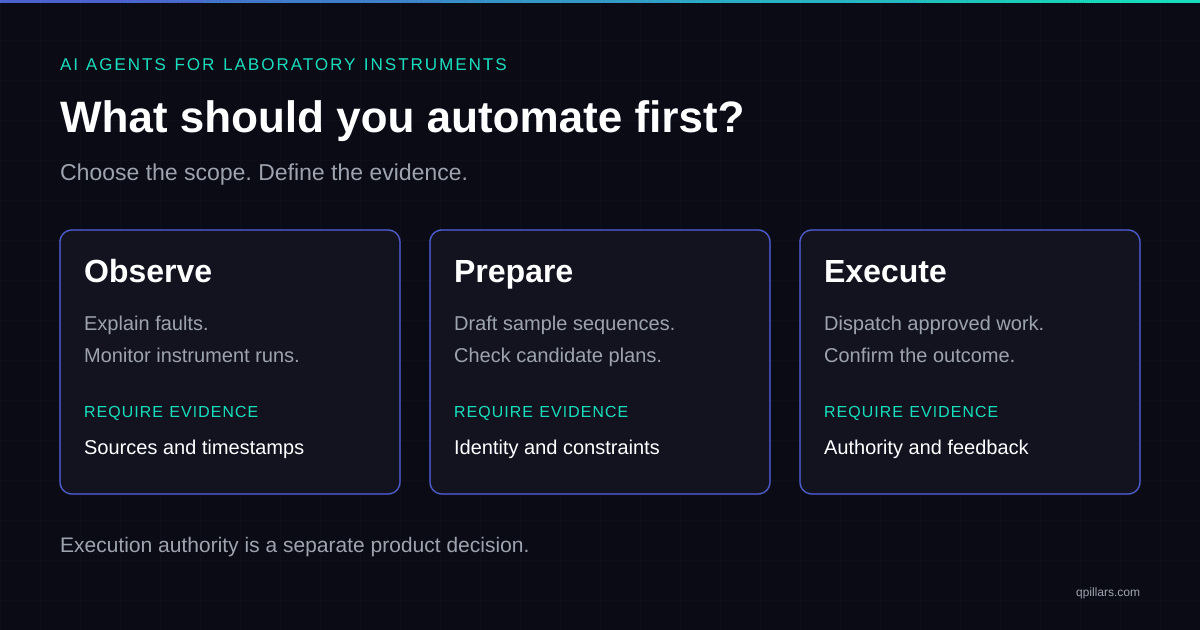
AI Agents for Laboratory Instruments: 7 Use Cases and What to Automate First
Explore seven AI agent use cases for laboratory and analytical instruments, with integration requirements, control boundaries, and a practical starting point.
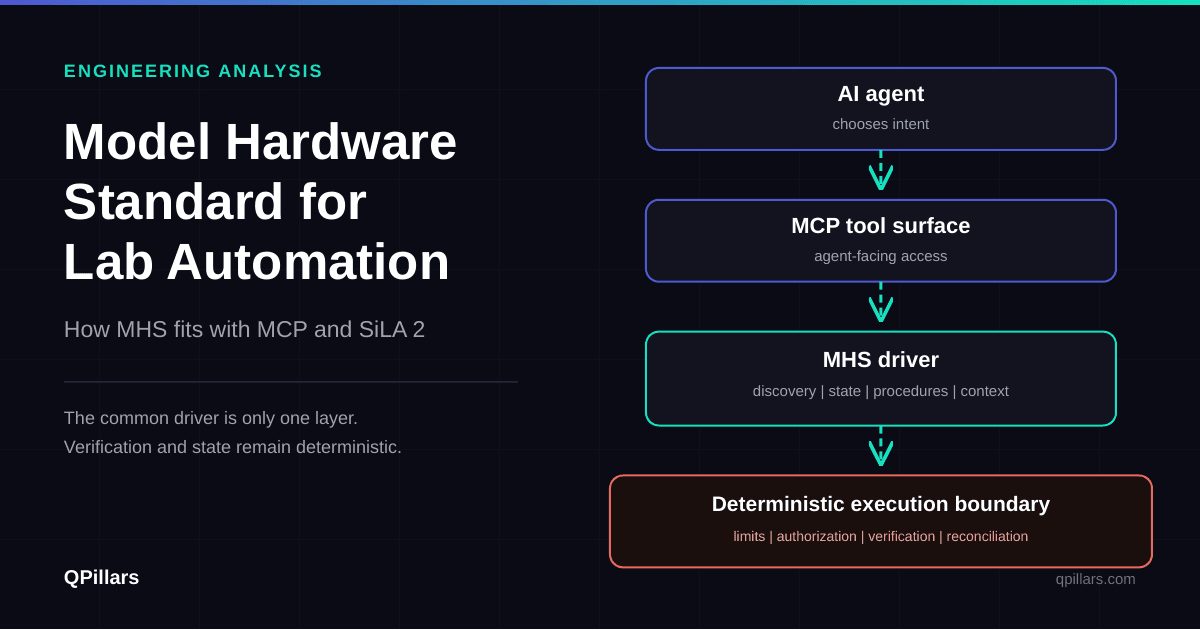
Model Hardware Standard for Lab Automation: MHS, MCP, and SiLA 2
What Anthropic's Model Hardware Standard means for lab automation, how MHS fits with MCP and SiLA 2, and what instrument vendors should build next in 2026.
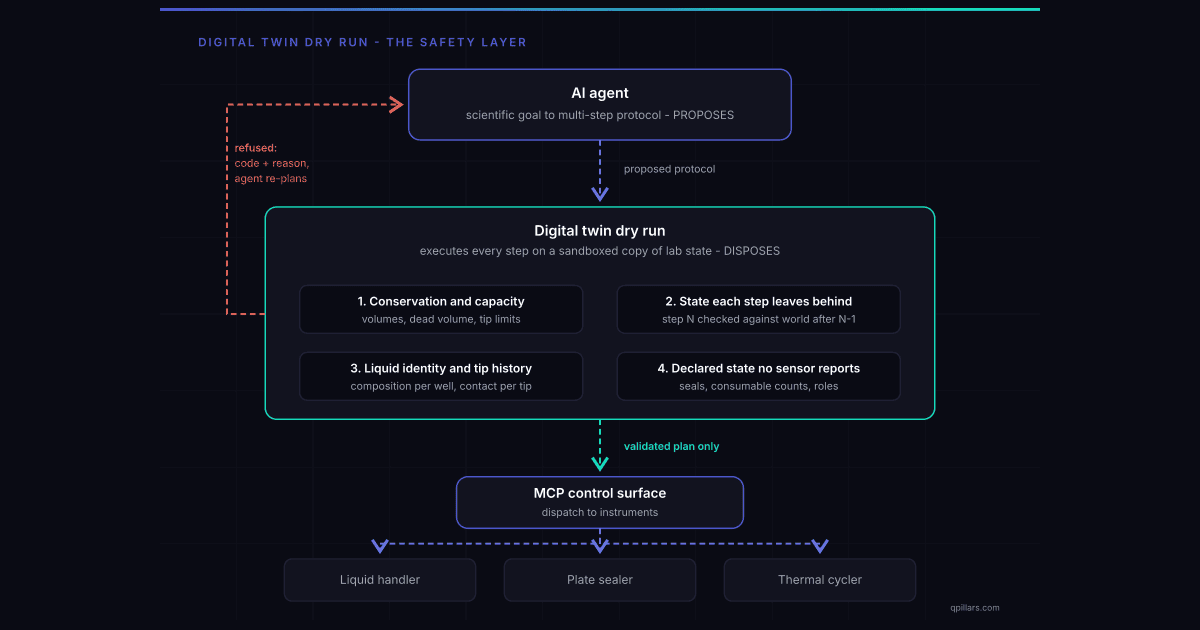
Why Your AI Agent Needs a Dry Run: Digital Twins as the Safety Layer for Lab Automation
AI agents can drive lab instruments, but only a digital twin dry run makes them safe. The architecture that validates every protocol before anything moves.
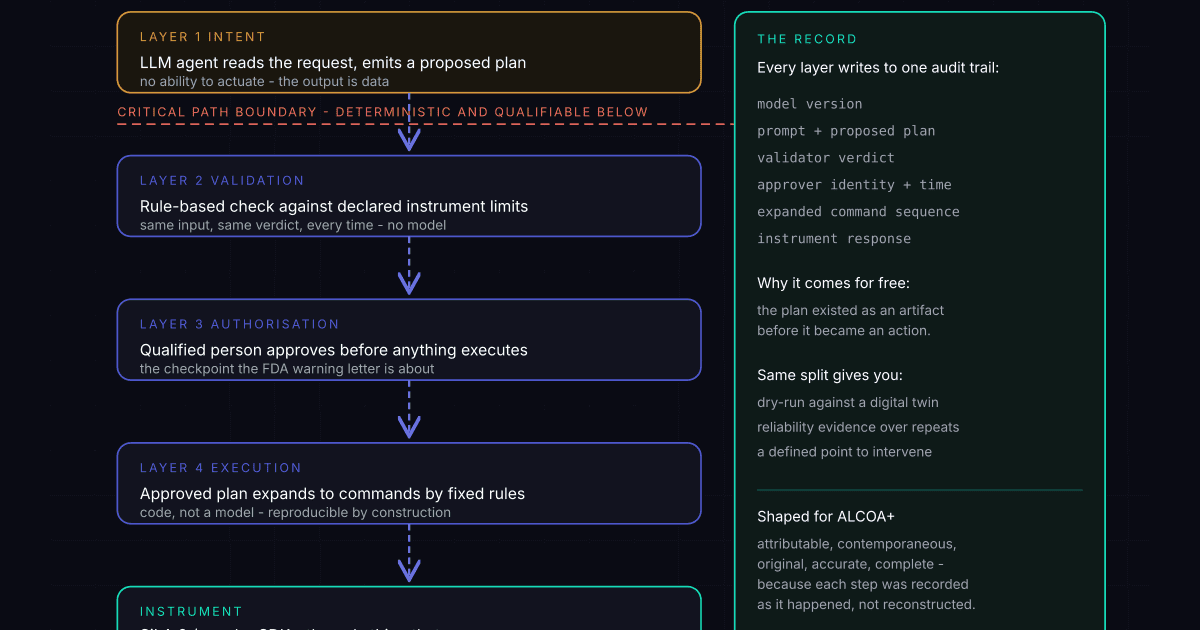
How to Use AI Agents in a GMP Lab Without Putting the LLM in the Critical Path
Draft Annex 22 keeps LLMs out of critical GMP applications. The architecture that lets a regulated lab use AI agents anyway: propose, validate, execute.
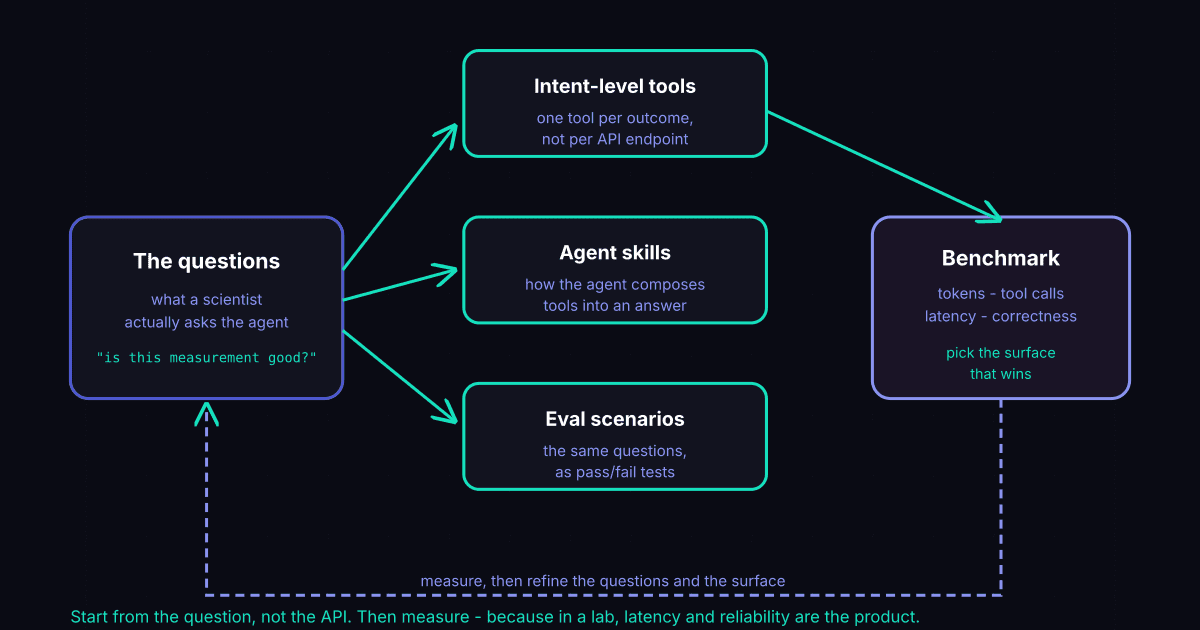
How to Design AI Agents for Lab Automation: Start From the Question, Not the API
Designing AI agents for lab instruments starts with the questions a scientist asks - not the instrument's API. The method, and the benchmark data that proves it.
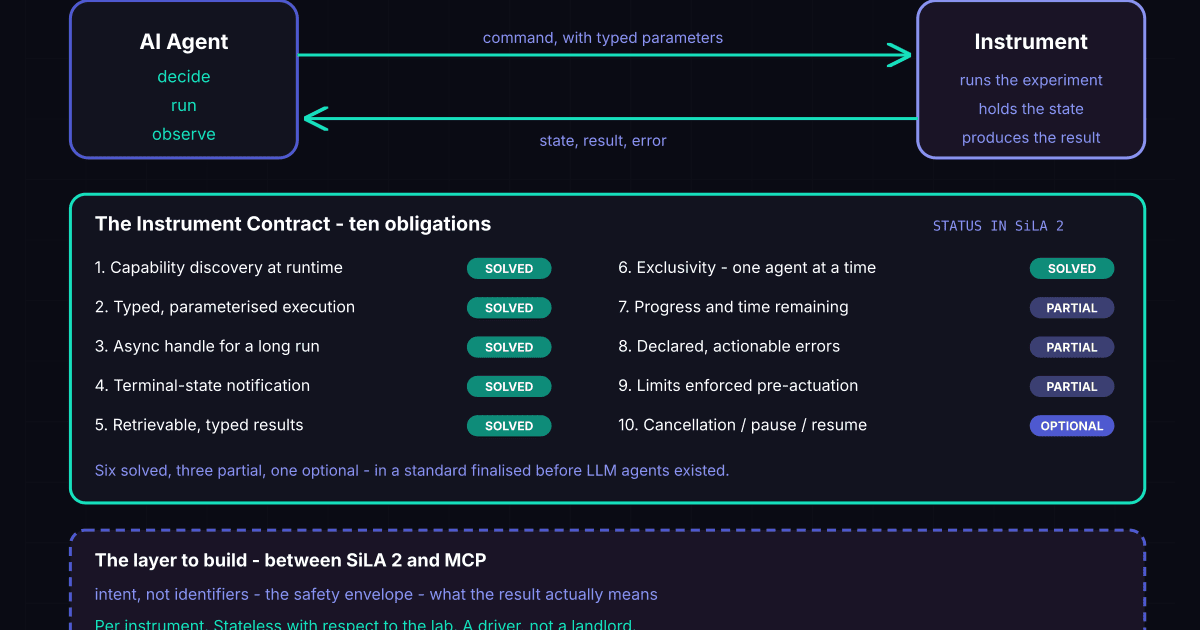
The Instrument Contract: What a Lab Instrument Must Expose for an AI Agent to Close the Loop
Agentic AI for lab automation fails at the instrument boundary, not for lack of a platform. The ten obligations an instrument owes an agent - and how much SiLA 2 already gives you.
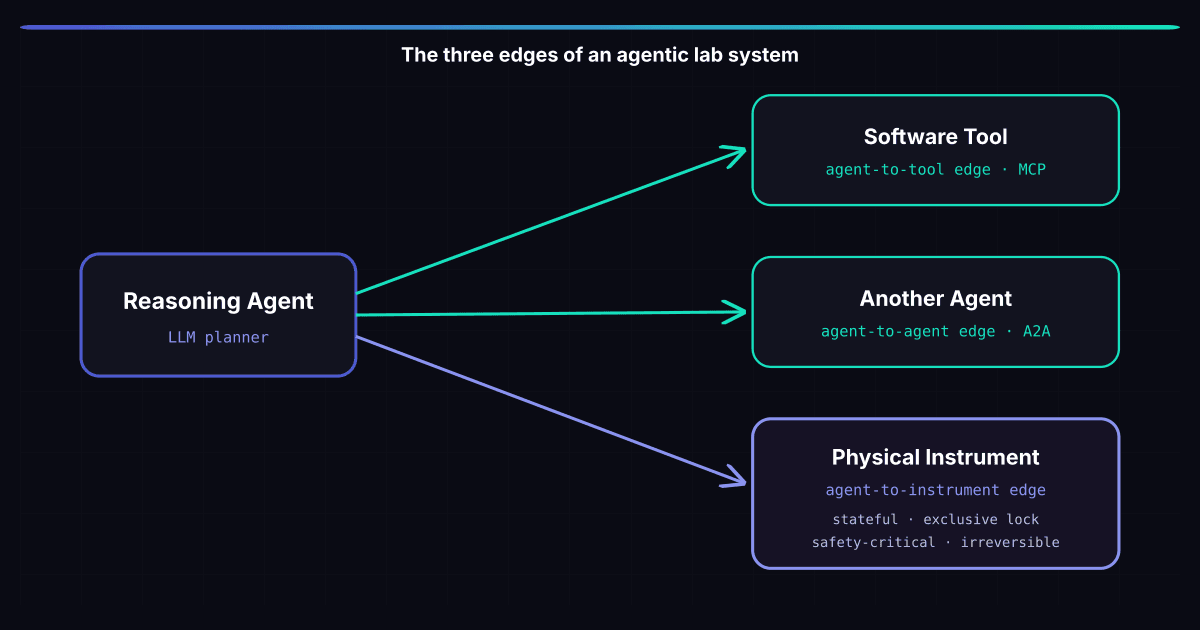
Agentic AI for Lab Automation: Why a Lab Instrument Is Not Just Another Tool
Agentic AI for lab automation breaks at the agent-to-instrument edge. Why controlling a physical instrument is harder than a tool call, and how to do it safely.
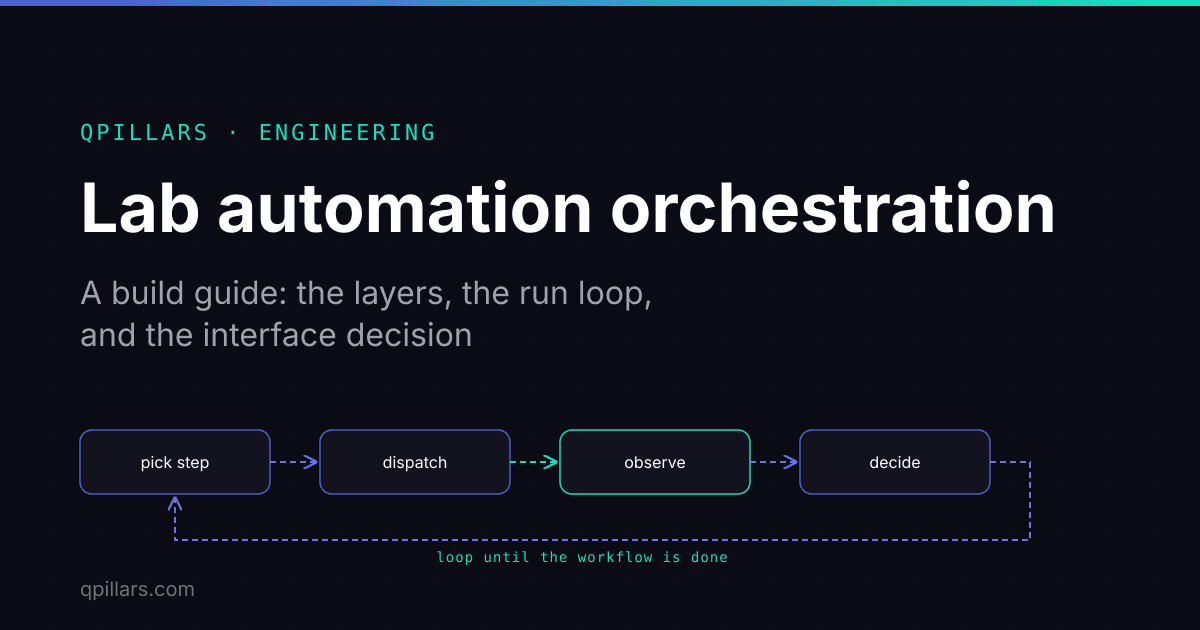
How to Build a Lab Automation Orchestration Platform
A build guide for a lab automation orchestration platform: the layers to ship, the run loop at its core, the device-interface decision, and how to onboard instruments fast.
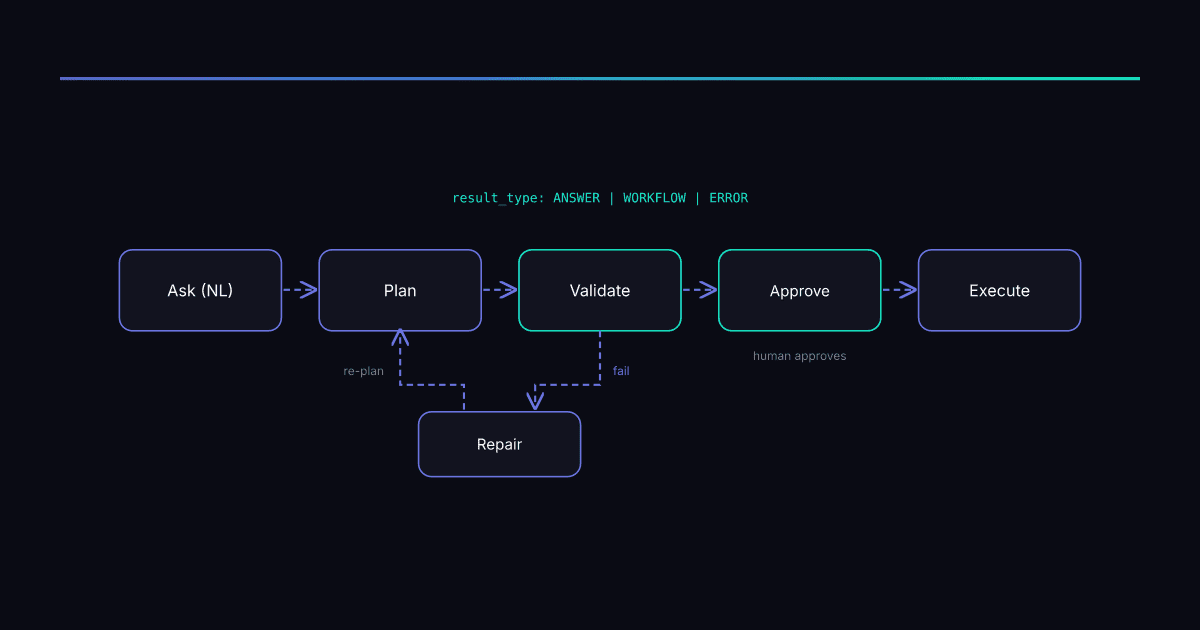
How to Build Reliable AI Agents for Lab Instruments
Why reliable AI agents for lab instruments come from intent-level MCP design, deterministic expansion, and evaluation before any UI - not from the model or the framework.
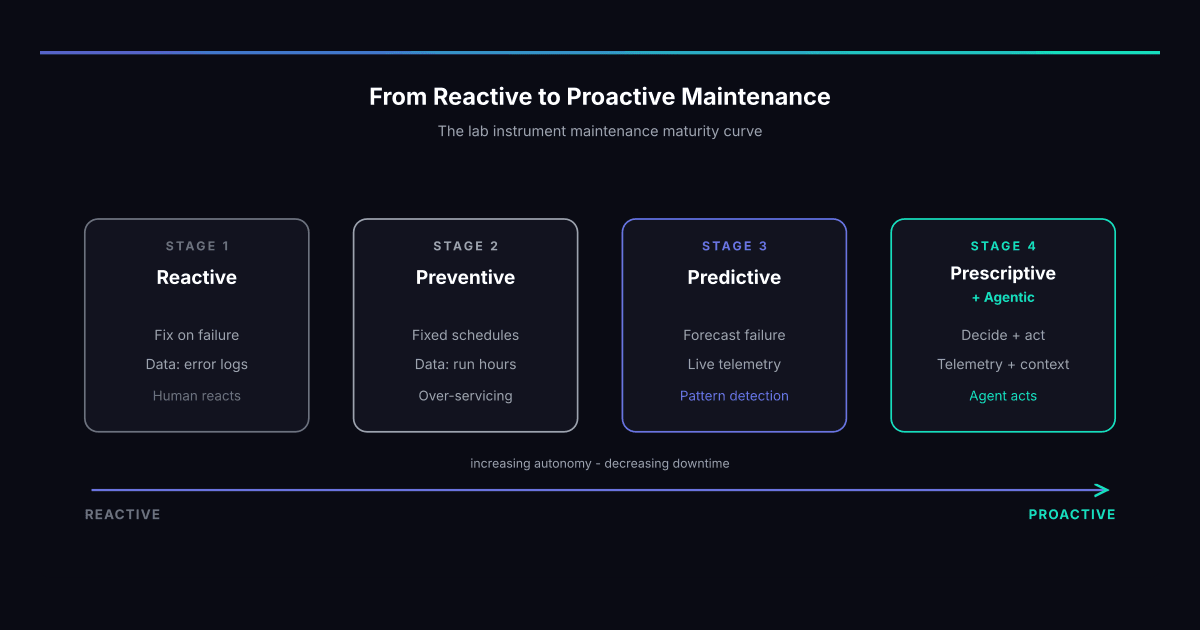
AI Predictive Maintenance for Lab Instruments: From Reactive Alerts to Proactive Agents
How AI predictive maintenance for lab instruments turns telemetry into action - moving labs from reactive repair to proactive, agent-driven uptime.
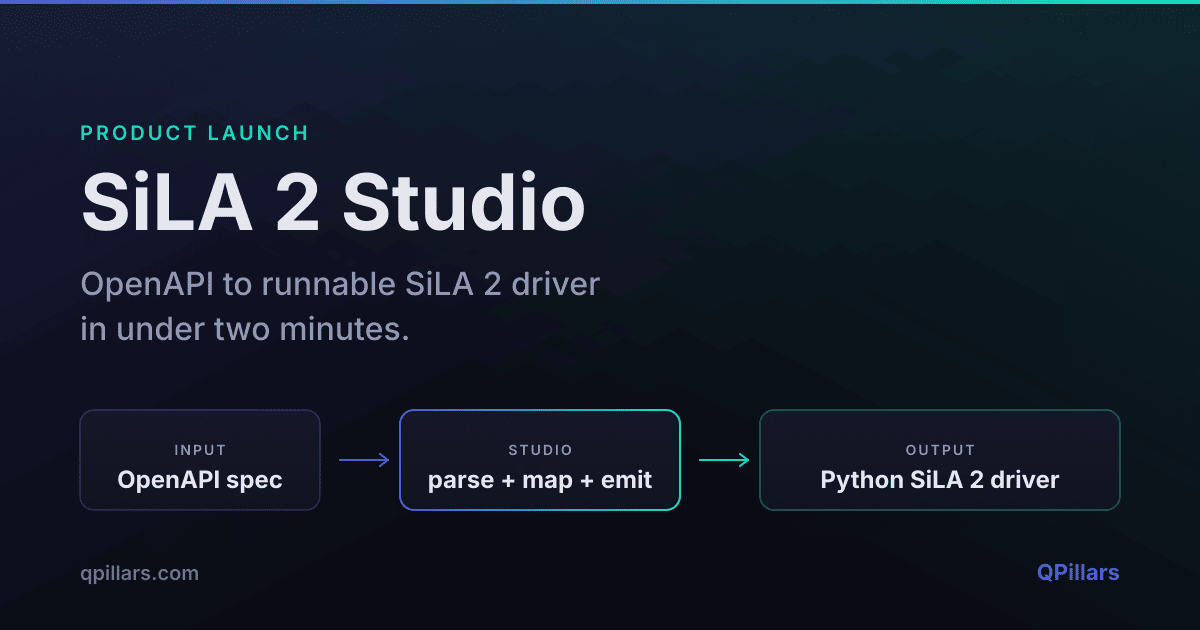
Launching SiLA 2 Studio: OpenAPI to SiLA 2 driver in two minutes
QPillars releases SiLA 2 Studio - a free hosted tool that generates a runnable Python SiLA 2 driver scaffold from any OpenAPI spec. Open-source generator under the hood.
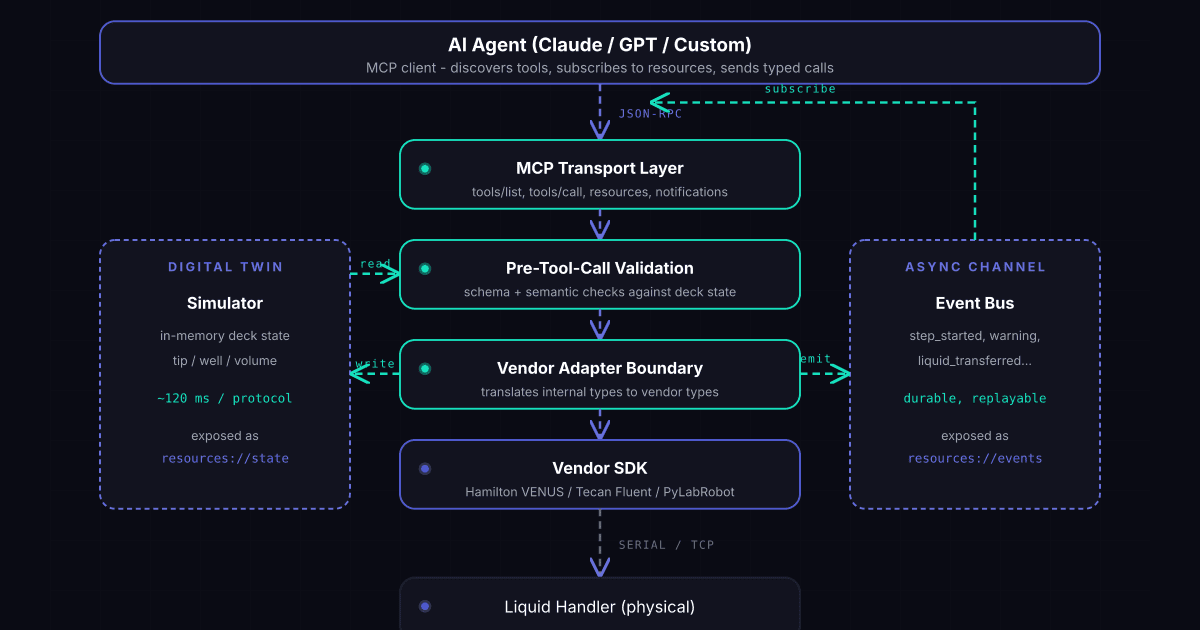
Building an MCP Server for Laboratory Instruments on Top of Vendor SDKs - 4 Lessons From LiquidBridge
Lessons from wrapping liquid-handler vendor SDKs in an MCP server: adapter layering, pre-tool-call validation, async event channels, and plan simulation.
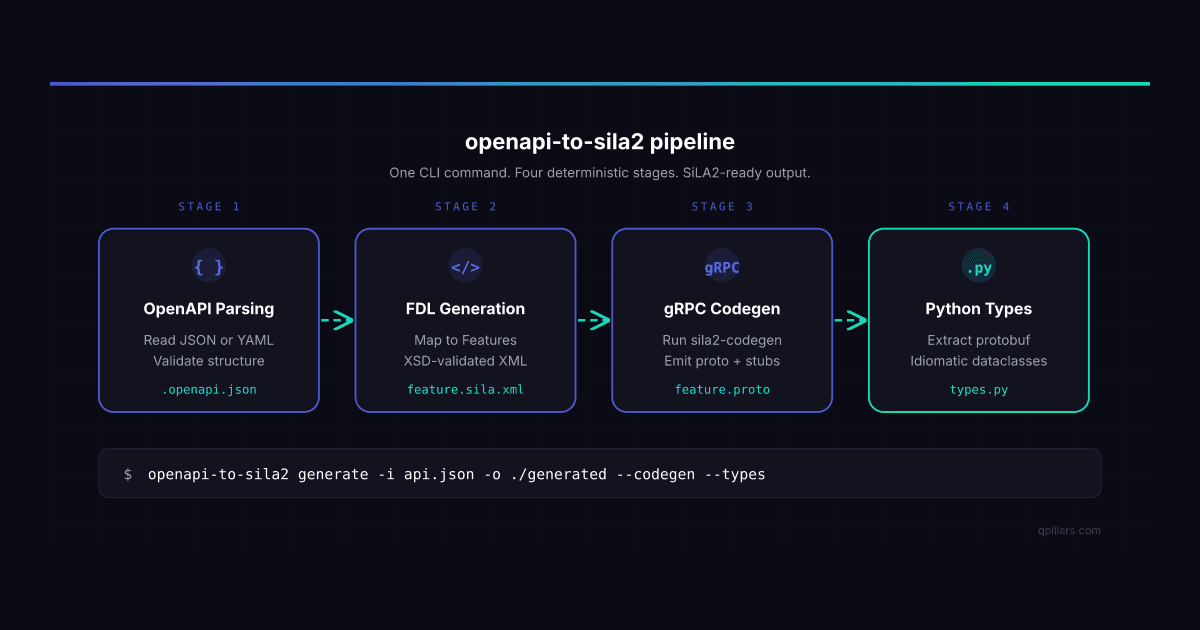
Why REST APIs and SiLA2 Don't Talk - And How to Bridge Them
REST and SiLA2 use incompatible wire protocols. openapi-to-sila2 auto-generates SiLA2 FDL XML and gRPC stubs from an OpenAPI spec - bridge in minutes.
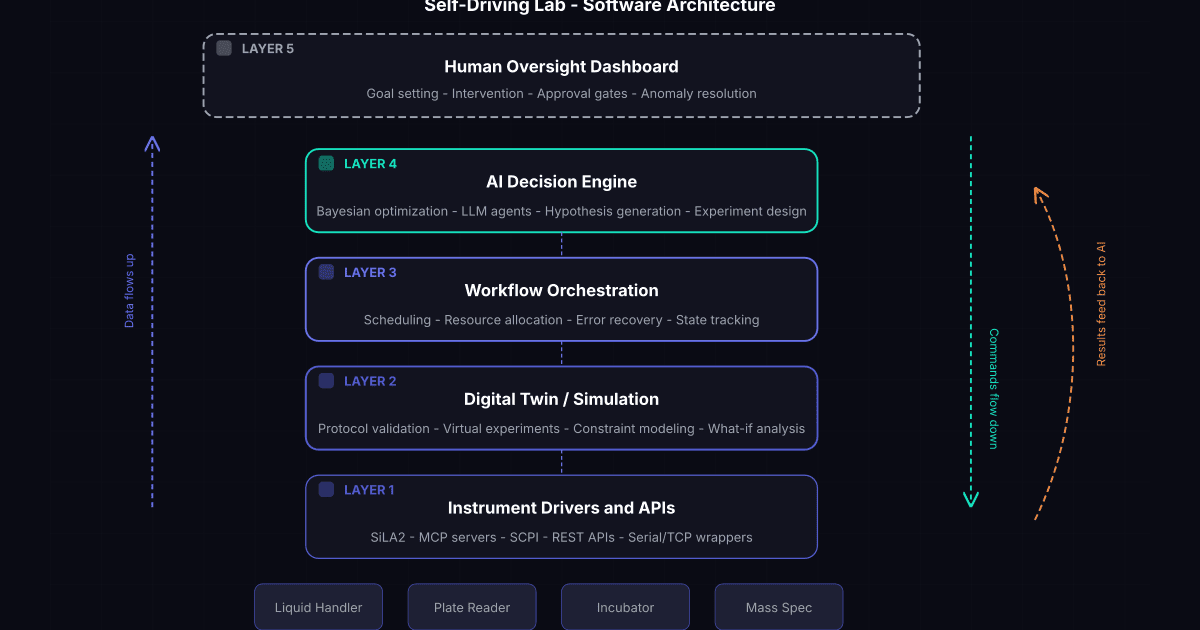
Self-Driving Labs in 2026 - What Actually Works vs. What's Still Hype
An evidence-based analysis of self-driving laboratories in 2026. What SDL technology actually ships, what remains marketing, and why the software middleware layer is the real bottleneck.
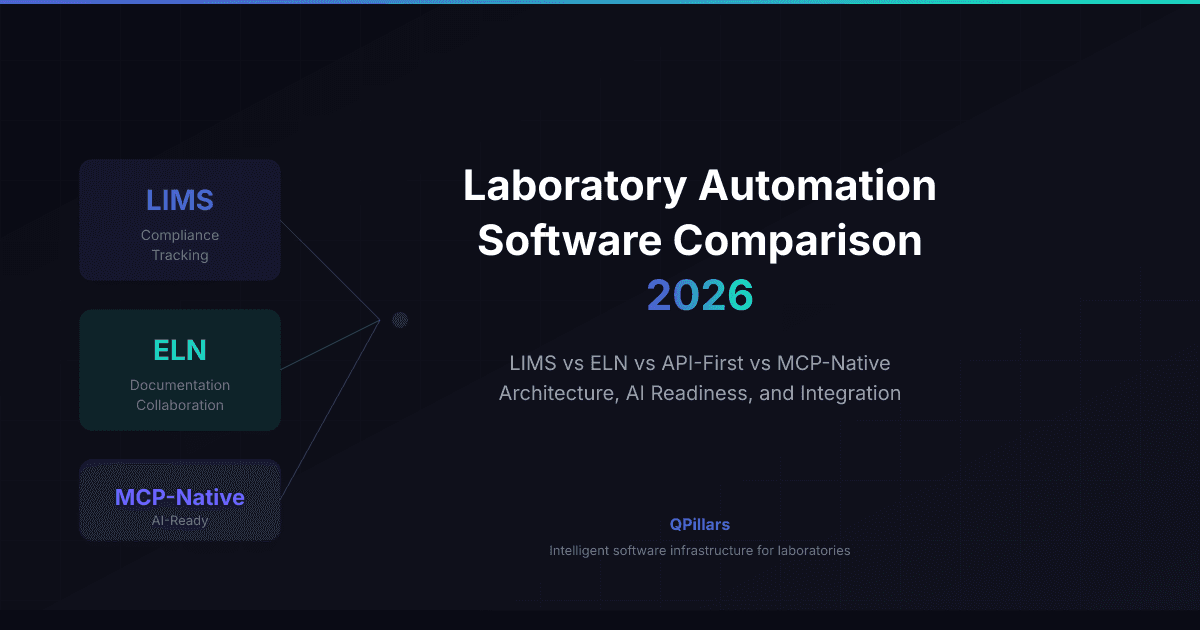
Laboratory Automation Software Comparison 2026 - LIMS, ELN, and the Rise of API-First Platforms
Comprehensive comparison of laboratory automation software in 2026. LIMS vs ELN vs custom platforms, vendor middleware vs API-first vs MCP-native architectures, and a decision framework for labs.
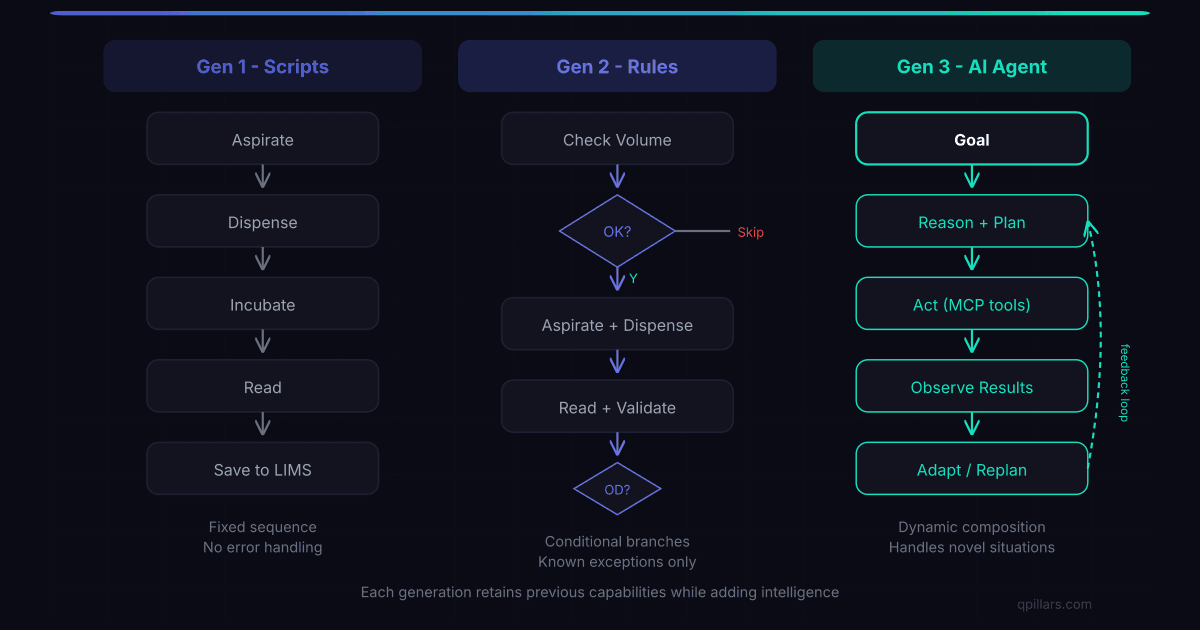
Agentic AI for Lab Workflows - From Scripts to Autonomous Systems
How AI agents replace rigid lab automation scripts with systems that reason, adapt, and compose multi-step workflows. Architecture patterns, safety, and the realistic path forward.
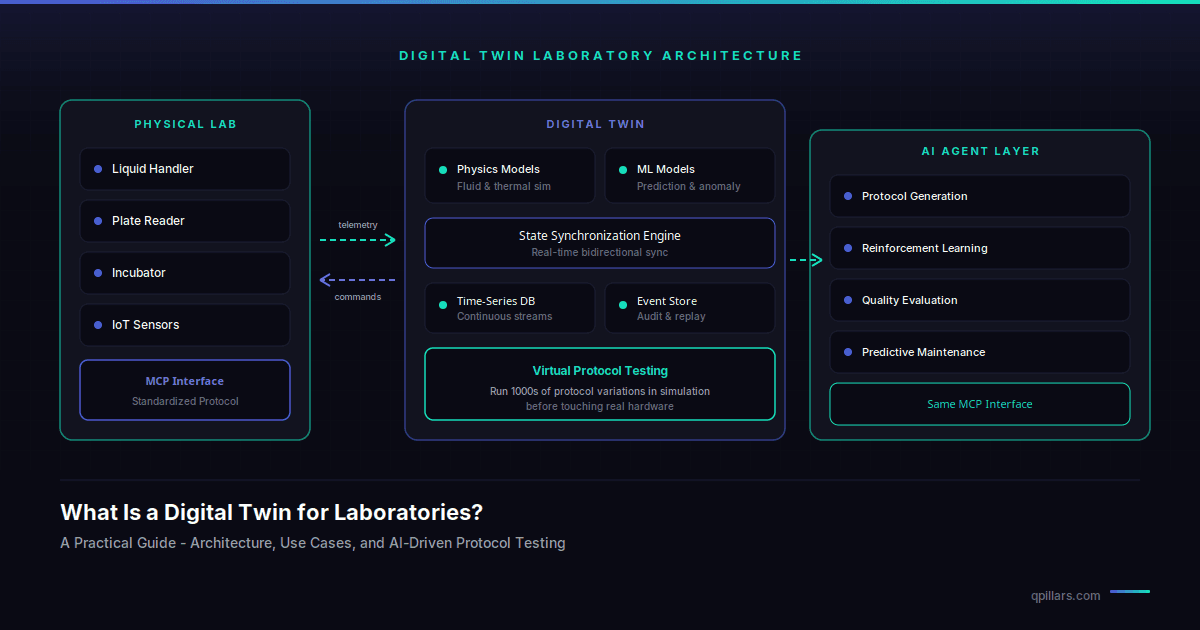
What Is a Digital Twin for Laboratories? A Practical Guide
A digital twin laboratory creates a live virtual replica of lab instruments and workflows. Learn architecture, use cases, and AI-driven protocol testing.
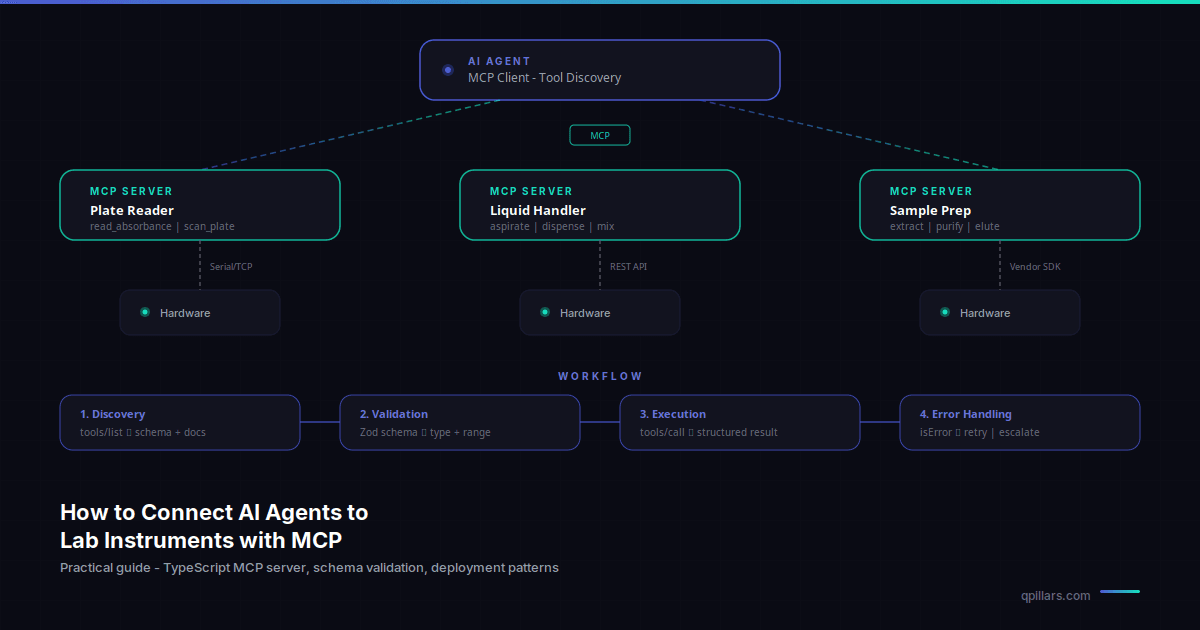
How to Connect AI Agents to Lab Instruments with MCP
A practical guide to building AI instrument control software with MCP. TypeScript code walkthrough, architecture patterns, and comparison to REST/SDK integrations.
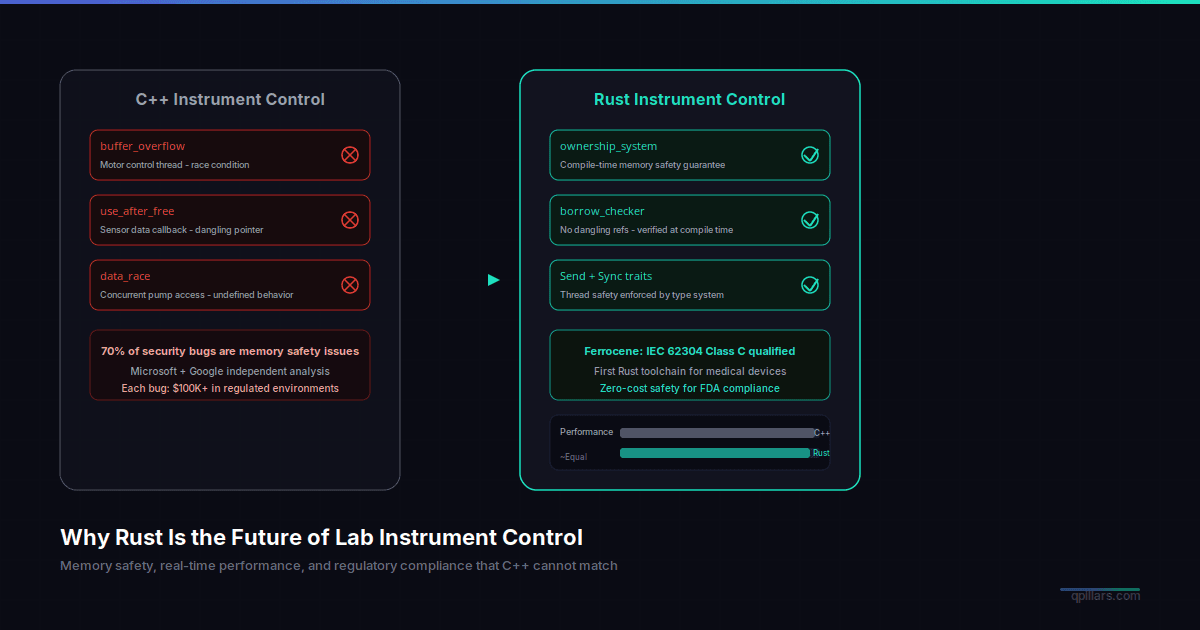
Why Rust Is the Future of Laboratory Instrument Control
Rust laboratory instrument control offers memory safety, real-time performance, and regulatory compliance that C++ cannot match. Here is why we are making the switch.
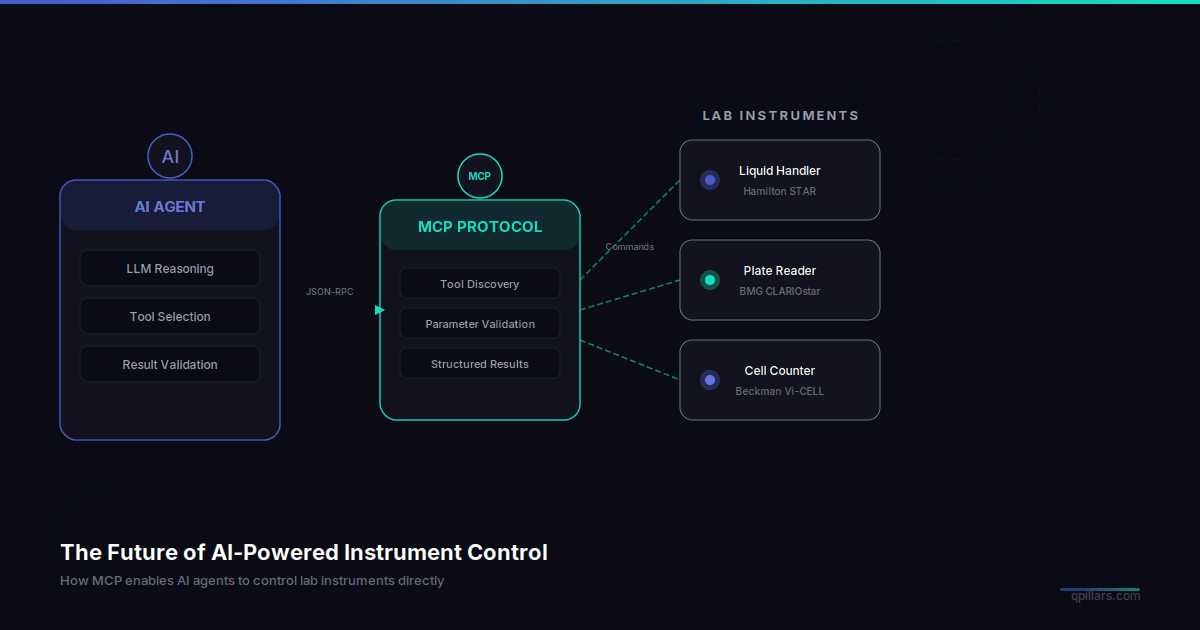
The Future of AI-Powered Instrument Control
How MCP enables AI agents to control lab instruments, why current LIMS/ELN integrations fall short, and how QPillars approaches the problem differently.
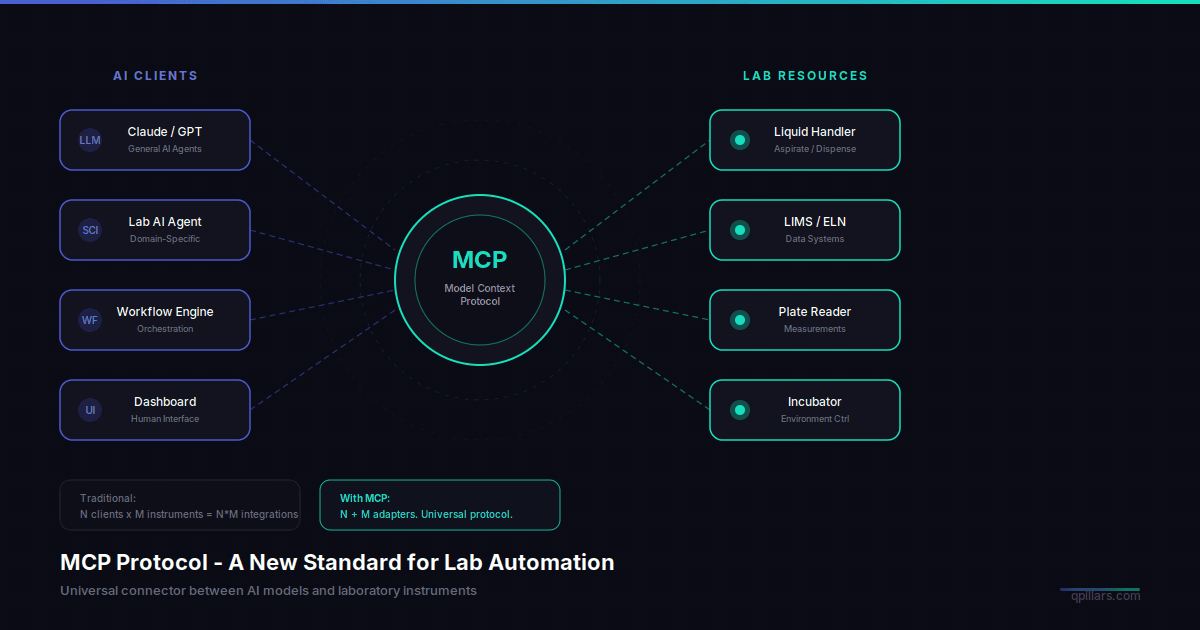
MCP Protocol - A New Standard for Lab Automation
What is the Model Context Protocol, why it matters for scientific instruments, and how it compares to traditional API integrations in laboratory environments.